
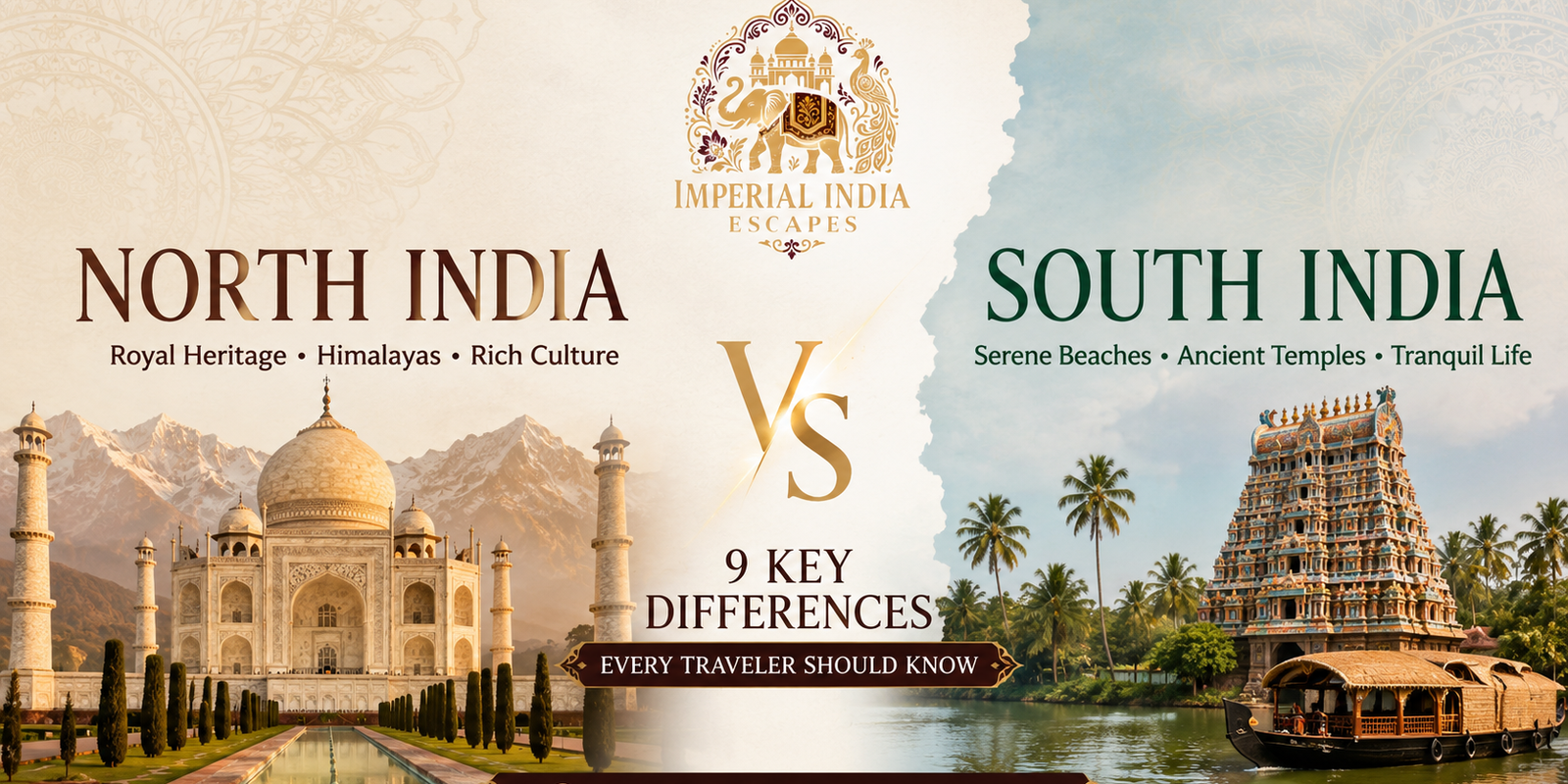
Planning your first holiday to India from the UK can be exciting, but choosing where to begin is not always easy. North India and South India offer very different travel experiences, and the better choice depends on what you want from your holiday.
North India is particularly appealing if you want iconic monuments, Mughal and Rajput heritage, forts, palaces and classic destinations such as Delhi, Agra and Rajasthan. South India can be a better fit if you prefer tropical landscapes, ancient temples, Kerala’s backwaters, beaches, wildlife and a slower-paced journey.
For UK travellers, there is no single answer to which region is best. Your travel dates, interests, available time and preferred style of holiday should guide the decision. The comparison below will help you decide whether North India, South India, or a combination of both is right for your trip.
North India vs South India: Landscapes and Natural Beauty
One of the biggest differences between North and South India for UK travellers is the landscape.
North India travel can take you from the golden deserts of Rajasthan to the green valleys of Himachal Pradesh and the dramatic mountains of Uttarakhand. Cities such as Jaipur, Agra, Delhi and Jodhpur also add impressive historical surroundings to your journey.
South India travel has a more tropical character. Kerala is famous for its backwaters and coconut-lined landscapes, while Karnataka offers forests, waterfalls and historic towns. Tamil Nadu is particularly appealing for travellers interested in temples and traditional architecture.
If you enjoy mountains, deserts and royal landscapes, North India may suit you better. If you prefer beaches, greenery and tropical scenery, South India could be the stronger choice.
North India vs South India: History and Architecture
India’s history is incredibly diverse, and each region tells a different story.
North India is ideal for travellers fascinated by forts, palaces, Mughal architecture and royal history. The Taj Mahal in Agra, Amber Fort in Jaipur and the historic streets of Delhi are among the experiences that make the region memorable.
South India offers a different architectural experience. Ancient Dravidian temples, detailed stone carvings and enormous temple complexes dominate many destinations. Madurai, Thanjavur, Hampi and Mahabalipuram provide fascinating examples of southern India’s artistic and cultural heritage.
For history lovers, neither region is a wrong choice — it simply depends on which chapter of India’s history interests you most.
Food and Culinary Experiences
Food can completely change the way you remember a destination.
North Indian cuisine is often associated with dishes such as butter chicken, biryani, kebabs, naan and rich curries. Rajasthani cuisine also offers distinctive dishes such as dal baati churma and gatte ki sabzi.
South Indian food has its own personality, with dosa, idli, sambar, rasam, appam and a wide variety of rice-based meals. Kerala is also well known for seafood and coconut-based dishes.
For British travellers who enjoy trying new flavours, both regions provide excellent opportunities to explore local food rather than simply eating familiar dishes.
Culture and Local Traditions
The India travel experience changes considerably from one region to another.
North India has strong influences from Mughal, Rajput and other historic cultures. You may encounter colourful festivals, traditional music, handicrafts and royal customs during your journey.
South India has equally rich traditions, particularly through classical dance, temple ceremonies, regional festivals and traditional arts.
The best approach is to travel with an open mind. Instead of expecting India to look or feel the same everywhere, enjoy the differences. That variety is one of India’s greatest strengths.
Climate and Best Time to Visit North or South India
Climate is another important consideration when deciding between the two regions.
North India can experience cooler winters, particularly in Delhi, Rajasthan and the Himalayan areas. Winter is generally attractive for sightseeing because daytime temperatures can be more comfortable in many popular destinations.
South India generally has a warmer, more tropical climate. Kerala, Goa, Tamil Nadu and Karnataka can be appealing at different times of the year, depending on the destination and monsoon conditions.
If you dislike very hot weather, carefully selecting your travel month is essential. A well-planned itinerary can make your holiday far more comfortable.
Beaches, Backwaters and Relaxation: North vs South India
If beaches, backwaters and a slower pace of travel are important to you, South India may be the better fit.
Kerala’s backwaters offer a peaceful experience, especially when travelling by traditional houseboat. Goa is another popular choice for beaches, while coastal Karnataka and Tamil Nadu provide additional options for travellers who want to explore beyond the most famous destinations.
North India is less focused on tropical beach holidays but offers other relaxing experiences, including luxury heritage hotels, Himalayan retreats and peaceful cultural destinations.
So, when considering North India vs South India which is better, ask yourself what relaxation means to you. A beach holiday and a mountain retreat are very different experiences.
Which Travel Style Suits You: North or South India?
Your preferred travel style should influence your decision.
North India is excellent for travellers who want a classic cultural circuit. Delhi, Agra and Jaipur can be combined into a popular Golden Triangle itinerary, while Rajasthan can be extended with destinations such as Udaipur and Jodhpur.
South India is ideal for slower, more varied journeys combining temples, wildlife, beaches, plantations, backwaters and hill stations.
For a first trip to India, North India can be a strong introduction if iconic monuments and famous historical destinations are your priority. South India can be more appealing if you want a combination of nature, food, culture and relaxation.
North India vs South India Travel Cost
The North India vs South India travel cost depends heavily on your accommodation, transportation, travel season and itinerary.
Both regions offer choices for different budgets. You can find simple accommodation and local restaurants, or choose premium hotels, private drivers and luxury experiences.
North India’s popular tourist circuit can be convenient because several major attractions are located relatively close together. In South India, longer distances between destinations can sometimes increase transportation costs, especially when creating a multi-state itinerary.
Rather than choosing a destination purely because it appears cheaper, compare the complete trip — including hotels, transfers, activities, meals and internal travel.
North India or South India: Which Should You Visit First?
So, North India or South India — which should you visit first?
Choose North India if you want:
- The Taj Mahal and other iconic monuments
- Mughal and Rajput history
- Forts, palaces and heritage experiences
- Rajasthan’s desert landscapes
- A classic Delhi–Agra–Jaipur itinerary
- A holiday focused on history and iconic sightseeing
Choose South India if you want:
- Ancient temples and regional culture
- Kerala’s backwaters
- Tropical landscapes and beaches
- Wildlife, plantations and hill stations
- A slower-paced and varied holiday
- A combination of nature, culture and relaxation
For UK travellers visiting India for the first time, either region can work well. The right choice depends on your interests, travel dates and how much time you have available.
If you have enough time, combining North and South India can create a broader experience of the country. However, trying to cover too much in one holiday can mean spending more time travelling between destinations rather than enjoying them.
North India vs South India: Quick Comparison for UK Travellers
| Travel Factor | North India | South India |
|---|---|---|
| Landscape | Mountains, deserts, plains | Beaches, forests, hills, backwaters |
| Famous Experiences | Taj Mahal, forts, palaces | Temples, houseboats, beaches |
| Food | Naan, kebabs, rich curries | Dosa, idli, seafood, rice dishes |
| Culture | Mughal & Rajput influences | Dravidian traditions & temple culture |
| Climate | Greater seasonal variation | Mostly warmer and tropical |
| Best For | History & iconic landmarks | Nature, culture & relaxation |
| Travel Style | Classic sightseeing circuits | Slower multi-experience journeys |
Final Thought: Which Is Better for Your India Holiday?
There is no universal winner in the North India vs South India debate. The better destination is the one that matches your interests, available time, travel dates and preferred style of holiday.
For travellers from the UK visiting India for the first time, North India can offer grand monuments, royal history and iconic sightseeing, while South India can provide tropical scenery, temples, backwaters and more relaxed experiences. The most important thing is to build an itinerary around the experiences you genuinely want to enjoy.
Most importantly, do not treat India as one single travel experience. Every region has its own rhythm, food, architecture, traditions and landscapes. That is what makes exploring the country so rewarding.
If you are ready to turn your India travel plans into a carefully planned holiday, explore personalised itineraries and expert travel assistance at Imperial India Escapes. Let your Indian journey be more than a sightseeing trip — make it a collection of experiences you will remember long after returning to the UK.
Travel Enquiries & Contact Details
Name: Hitan Gudka
Address: 4 Hamble Road, Leicester, LE2 4NX, United Kingdom
Phone: +44 7471 546882
Plan Your India Escape
Ready to discover India beyond the usual tourist route?
From royal palaces and iconic monuments in the north to tropical Kerala, ancient temples and peaceful southern landscapes, your journey can be designed around what you genuinely want to experience.
Contact us today to start planning your personalised India holiday from the UK.
Frequently Asked Questions
Is North India or South India better for a first trip to India?
Both are excellent choices. North India is particularly suitable for travellers interested in famous monuments, forts and royal history, while South India is ideal for beaches, temples, nature and relaxed travel.
How many days are enough for North India?
Around 7–10 days can work well for a focused itinerary covering destinations such as Delhi, Agra and Jaipur. More time allows you to explore Rajasthan or Himalayan destinations at a slower pace.
Is South India a good choice for UK travellers?
Yes. South India offers a wide range of experiences, including beaches, wildlife, cultural attractions, luxury accommodation and wellness-focused stays. It can be especially attractive to travellers looking for a more relaxed itinerary.
Which is more expensive, North India or South India?
There is no fixed answer. The total cost depends on accommodation, transportation, season, activities and the number of destinations included. Both regions offer options from budget to luxury travel.
Can I visit North and South India on the same holiday?
Yes, but it is better to allow sufficient time. If your holiday is short, focusing on one region can create a more comfortable and enjoyable experience rather than rushing between distant destinations.